
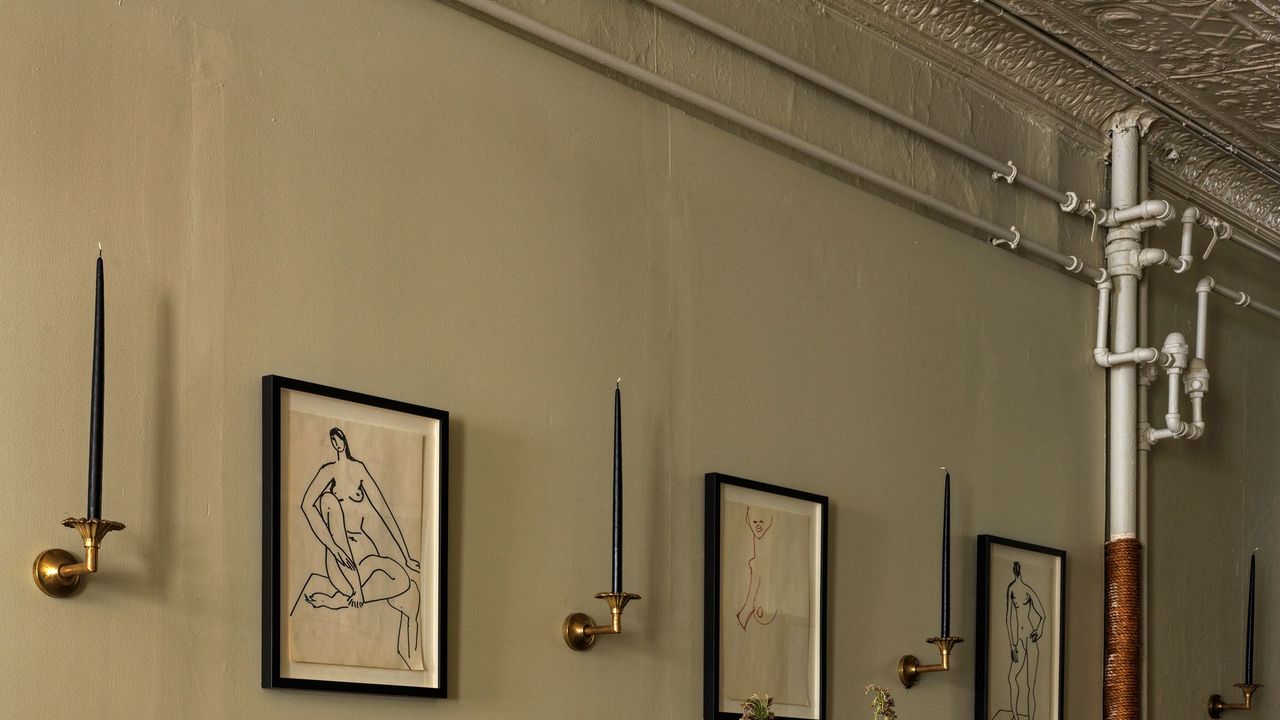

Where fluorescent lighting is best paired with a 4:30 p.m. dentist appointment, a candle sconce creates a sense of warmth—both literal and sensorial—that nothing with wattage could emulate. “I put sconces up to be used, not just looked at,” says Stissing House designer and creative director at Ash, Xavier Donnelly. “I include them in any room I want to feel bewitching in the way only candlelight can manage.”
This year’s nostalgia for Jane Austen interiors (which has also dovetailed with the return of the canopy bed and is not unrelated to the resurgence of perpetual girlhood) has put candlelit lighting back on the map, and retailers are meeting the moment with modern iterations of the antique. Sconces appeared in Sarah Sherman Samuel’s recent collection for Lulu and Georgia. From more niche marketplaces like Ferm Living and Svenskt Tenn all the way to Pottery Barn and GreenRow, the new-old illumination tactic was returning. Even Anthropologie makes an attempt here.

Enso cofounder Yuria Kailich, who makes candle sconces and other hand-patinated objects from her studio in Brooklyn, describes this trend as an adverse reaction to “a culture that moves quickly and adores convenience.” She adds, “People are craving objects that ask a little more of them, that invite them to pause, to touch, to light, to arrange and rearrange, and to return to the same small gestures over time.” The candle sconce invites a relationship between person and object—what Kailich calls “small anchors.”
The candle has long represented concerted moments of rest, reflection, and ritual. “Having breakfast by candlelight, dinner by candlelight, there’s a romance to it that I really got into,” says King of his time in Copenhagen, where the sun sets at 3:30 p.m. in winter. It creates something both comforting and ritualistic in its audience. The act of lighting the candle is a relationship and a gesture, while basking in its glow creates a sense of rest.
It takes something analog and romantic to bring us back into the moment. “In that way, even materials that are often read as cold, like metal, can become part of a warm, meditative experience when they are designed to hold these everyday acts of care and attention,” Kailich muses.